
La larga soledad
Por el fraile Vincent Petersen, OFM Conv.
Defender la justicia y la paz implica asumir un riesgo que los profetas conocían bien: ser ignorado, evitado e incomprendido. Alzar la voz en nombre de los marginados, los pobres y los excluidos puede acarrear soledad. La Sierva de Dios Dorothy Day escribe en La larga soledad: “Todos hemos experimentado la soledad, y hemos aprendido que la única solución es el amor, y que el amor nace de la comunidad”.”
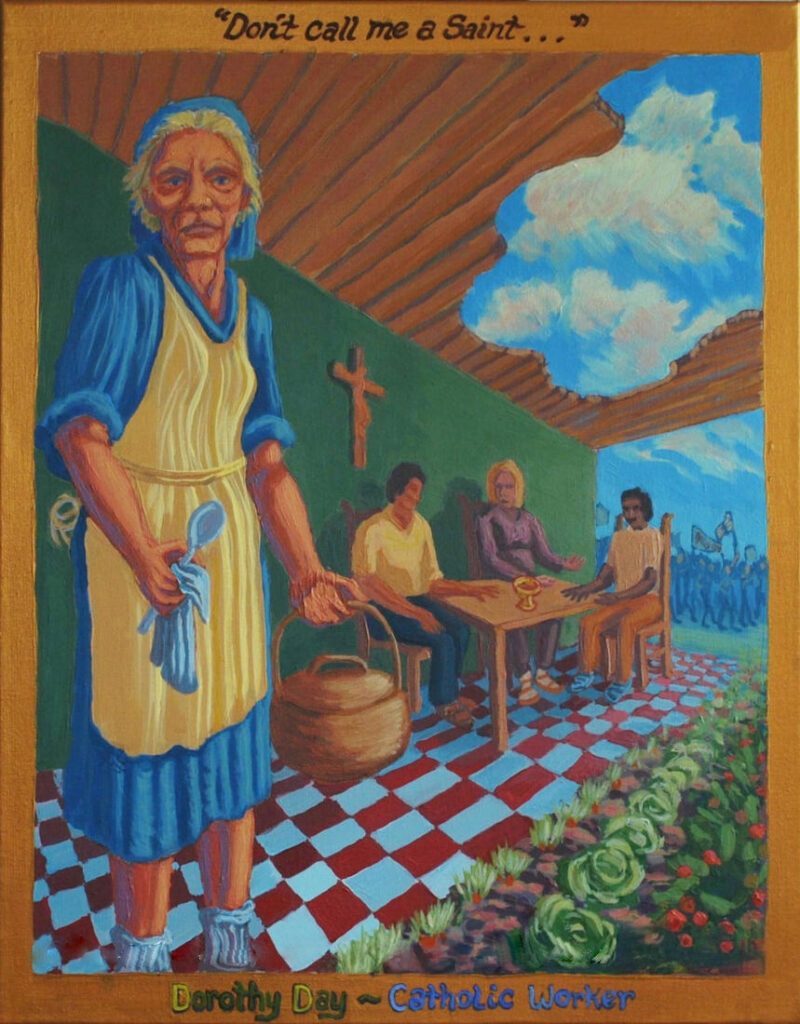
Mi propia soledad como activista y artista me llevó a escribir sobre iconos de santos y mártires contemporáneos. Como activista por la justicia social, Dorothy Day encontró su comunidad en la labor de la hospitalidad: ayudando a las personas sin hogar y desempleadas a través del Movimiento del Trabajador Católico. Yo encontré la mía en una conversación con ella.
Escribir un icono no es simplemente crear una imagen. Es someterse a un largo trabajo interior, moldeado por el ayuno y la oración, y por la disciplina de la forma. Los iconos se describen como “escritos”, no “pintados”, porque en el cristianismo oriental se consideran una forma de Escritura visual, teología u oración, más que una “obra de arte”. Mi estilo no es tradicional, pero el encuentro fue inconfundible. Dorothy Day me conmovió profundamente. No halagó mi visión; la fortaleció. Me animó y me desafió a seguir adelante, a seguir proclamando la verdad con color y línea, a seguir escuchando la exigencia del Evangelio. En su presencia, me sentí nuevamente atraído por la pasión de Cristo por los pobres y por la tenaz esperanza de un mundo libre de guerra y opresión.
Dorothy Day es una santa y profetisa que la Iglesia estadounidense necesita hoy, aunque a menudo reprendía a sus admiradores por llamarla así. Sentía que podía ser una forma de menospreciarla a ella y a las exigencias del Evangelio. Insistía en que “la obra de la justicia es fundamental para el seguidor de Cristo; nadie está exento”. Con sus palabras y su ejemplo, enseñó que practicar las obras de misericordia y la caridad no era suficiente. También hay que trabajar por la justicia social, incluyendo la transformación de los sistemas económicos injustos que mantienen a la gente en la pobreza.
Como laica católica, vivió dentro de la larga tradición profética de la oposición fiel. Cuestionó a los líderes de la Iglesia por su estilo de vida ostentoso y por no condenar las armas nucleares. Fue arrestada y encarcelada en numerosas ocasiones por su apoyo a los derechos civiles, por defender el derecho de los trabajadores a sindicalizarse y por su oposición a la guerra y al militarismo.
En esta imagen, vemos a Dorothy atendiendo a un grupo de personas sin hogar en una casa del Movimiento del Trabajador Católico, mientras que justo afuera, una marcha de protesta avanza por la calle. Se vuelve hacia nosotros como si repitiera las palabras que una vez le dijo a un periodista cuando le preguntó qué podía hacer: “Sí, ponte manos a la obra y limpia los baños”.“