
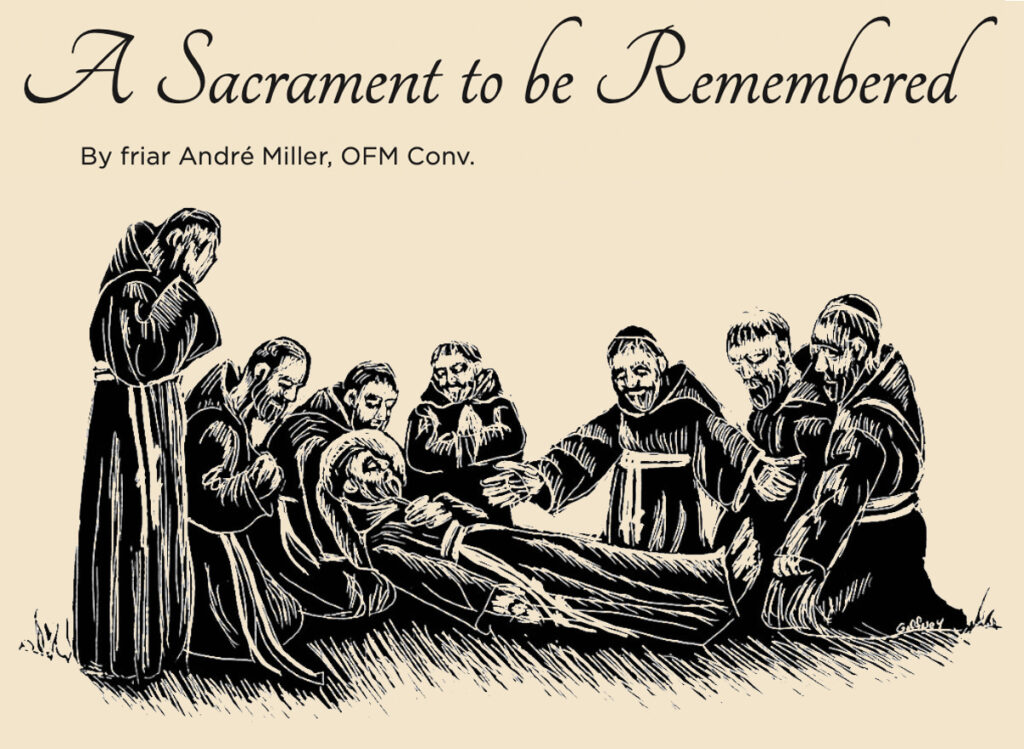
2026 marks eight hundred years since the Transitus—the passing of St. Francis of Assisi from this world to eternal life. To remember his death is to remember how he lived: utterly rooted in God’s Word. Francis did not only preach the Gospel; he returned to it repeatedly, letting it shape his every action and desire. For him, remembering Christ was not a pious thought—it was a way of life.
As his final hours drew near, Francis asked to be carried to the little chapel of the Portiuncula, “where he first came to know perfectly the way of truth.” Seventeen years earlier, it was there that he had first understood the Gospel call to total dependence on God. To die in that same place was not an act of nostalgia but of faith: a return to the beginning, to the root of his vocation.
There, rejoicing at the approach of “our Sister Bodily Death,” Francis asked the brothers to sing The Canticle of the Creatures once more, adding a final verse of praise “for Sister Death.” The song was his last sermon. Then he asked to hear the Passion of the Lord from the Gospel, to be read aloud. The Gospel his final companion. Finally, he requested to be laid on the ground, clothed in sackcloth and ashes, and so he passed from this life, his wounds radiant, his soul seen rising “bright as the sun.” In him, the Word had become deed; his very body became a living sign of God’s mercy—a sacrament to be remembered.
What made Francis radiant was not perfection but habit—the steady, humble return to God through prayer, Scripture, and fraternity. He imitated Jesus by remembering Him constantly. For Francis, to remember was to belong again to God. And for us, in an age full of noise and forgetfulness, his witness could not be more timely. He reminds us that all creation, and every human life, is nestled within God’s story of salvation. We are not forgotten; we are remembered into being.
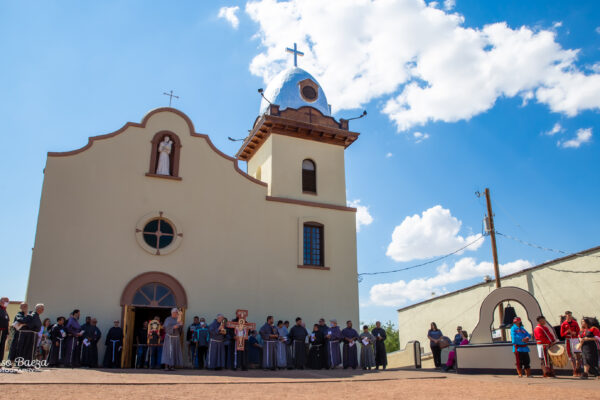
At our House of Studies in Silver Spring, Maryland, the friars celebrated Transitus alongside students at Archbishop Curley High School in Baltimore. In song and prayer, we re-enacted that night of 1226, with young people donning habits and walking in Francis’s footsteps. My novitiate classmate, friar Vincent Mary Ouly, offered a reflection that captured it well: “We do what we believe, and we believe what we do.”
That was the pattern of Francis’s life—and it remains the pattern of our faith. We pray the Creed to remember what we believe. We celebrate the Eucharist to remember Christ’s sacrifice and make it present again. We listen to Scripture to remember Who walks with us, and to rouse ourselves to walk with Him in return.
To remember Francis’s passing, then, is to return once more to the Word, to the living Christ who still calls us by name. In doing so, we become what we proclaim—a Church that is itself a sacrament to be remembered, a sign of God’s saving love for the world.